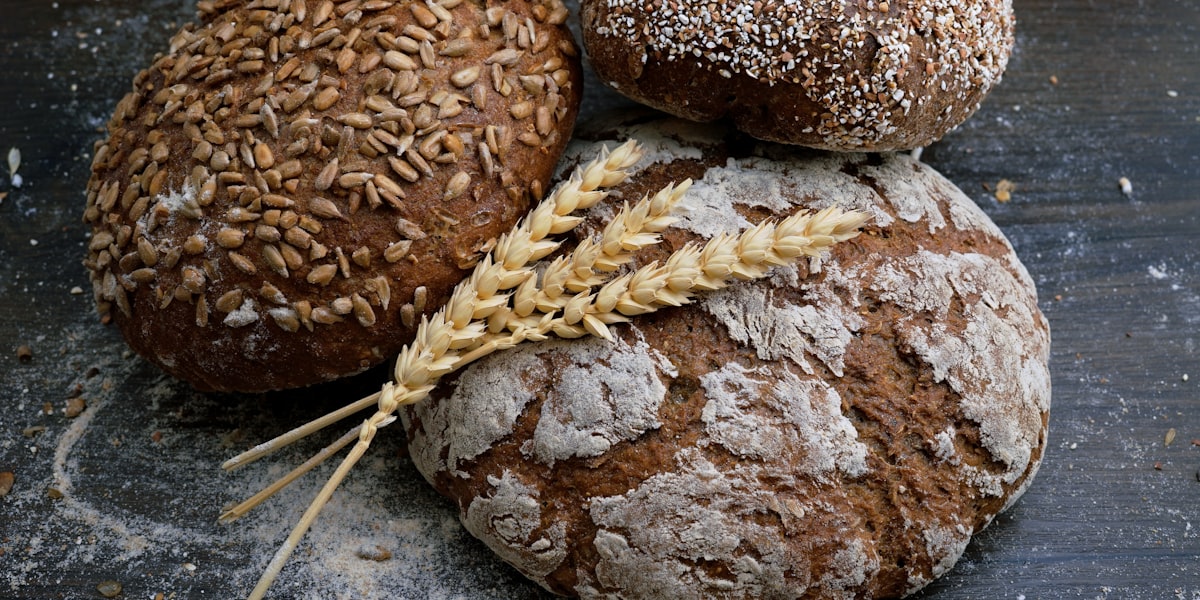
My grandmother never used the words “intermittent fasting.”
She wouldn’t have known what to do with them. In her kitchen — which always smelled like za’atar folded into bread dough and cardamom dissolving into the bottom of a coffee pot — the word was simply Ramadan. She’d been keeping this fast since she was a girl in the mountains of Lebanon, and her mother before her, and her mother before that. Fourteen hundred years of practice, passed down through kitchens, not laboratories.
I think about Teta every time I see another headline about time-restricted eating. Researchers in white coats, publishing papers about what she carried in her body like second nature: that there is something real and measurable about giving yourself rest from food. That the hunger passes. That something else arrives in its place — a lightness, a sharpness, a kind of quiet she never bothered to explain because she didn’t think it needed explaining.
Over the last decade, the science of fasting has become one of the most active areas of nutritional research. And much of what it’s uncovering would have made Teta pour you a coffee, sit you down, and say of course.
Here’s what the research shows — and what it might mean for how we think about our bodies this Ramadan.
What Happens When We Fast
When we stop eating, our bodies move through a series of metabolic shifts. Understanding this sequence helps make sense of both the hard parts and the good parts of Ramadan fasting — because they’re connected.
Hours 0–4: Your body is still running on glucose from your last meal. Insulin is elevated, telling your cells to take in sugar.
Hours 4–8: Blood sugar settles. Insulin drops. Your body reaches for glycogen — the stored glucose sitting in your liver and muscles.
Hours 8–12: Those glycogen stores start to thin out. Your body begins shifting toward burning fat for fuel.
Hours 12–18: Here’s where it gets interesting. Researchers describe this as “metabolic switching” — the transition from glucose metabolism to fatty acid and ketone metabolism. This shift appears to trigger cellular repair processes.
Hours 18+: Autophagy — the body’s internal cleanup crew — is thought to become increasingly active. Old, damaged cellular parts are broken down and recycled. Think of it as your cells clearing out the clutter.
During Ramadan, most of us fast somewhere between 12 and 16 hours a day, depending on where we live and the season. That places us right inside the window where many of these metabolic benefits appear to begin.
My grandmother didn’t know about metabolic switching. But she knew what the second week of Ramadan felt like — when the fog lifts and you feel like your body has remembered something it forgot.
What the Research Shows
Metabolic Health
Research consistently finds that most people experience improvements across several metabolic markers during Ramadan — including reduced LDL cholesterol, triglycerides, and blood glucose levels.
A 2018 study in Cell Metabolism followed adults through several weeks of time-restricted eating — with a comparable fasting duration to Ramadan, though with a different eating window and hydration permitted — and found significant improvements in blood pressure, oxidative stress markers, and insulin sensitivity.
What caught my attention: these benefits showed up even when people didn’t lose weight. It wasn’t simply about eating less. There was something about the pattern of fasting itself — the rhythm of feeding and rest — that mattered.
The data paints an interesting picture. Our grandmothers knew fasting changed how they felt. The research is beginning to show it changes how our bodies function at a metabolic level too.
Cellular Repair and Autophagy
Yoshinori Ohsumi won the 2016 Nobel Prize in Physiology or Medicine for his work on autophagy — the process by which cells break down and recycle their own damaged components. His research demonstrated that fasting is one of the most powerful triggers for autophagy.
A 2018 review in Ageing Research Reviews summarised evidence that intermittent fasting stimulates autophagy in multiple organ systems, potentially contributing to cellular health and longevity.
This is still emerging science, and it would be irresponsible to overstate it. But the mechanism is real: fasting gives your cells time to clean house. There’s something deeply satisfying about that — a practice rooted in spiritual discipline turns out to give the body space to heal itself at a cellular level.
Cognitive Function
This one surprised me, honestly. I expected the research to confirm what we sometimes feel in those first few days — the sluggishness, the scattered thinking. But multiple studies have found that cognitive function either stays stable or improves during Ramadan fasting.
A 2017 study in Nutrition tested cognitive performance in healthy men following a Ramadan-style fasting protocol and found no major impairment in cognitive functions. Given the demands of daily fasting — no food, no water, for half the waking day — that’s a noteworthy finding on its own.
Animal studies suggest fasting may stimulate the production of brain-derived neurotrophic factor (BDNF), a protein that supports the growth and survival of neurons. The human evidence is still developing, but it’s promising.
My mother always said she thought more clearly in Ramadan. I used to think she was being romantic about it. Maybe she was just paying attention.
Weight and Body Composition
The research on Ramadan and weight is more nuanced than the headlines suggest. A 2019 meta-analysis in Nutrients found that most people experience modest weight loss during Ramadan (typically around 1–1.5kg), but much of this is often regained afterward.
The pattern matters more than the number on the scale: studies show that those who maintain consistent meal timing and don’t over-compensate at iftar tend to retain benefits longer.
We all know someone who loses weight every Ramadan only to find it again by Eid. The research confirms what we observe at our own dinner tables.
The Challenges Are Real
I want to be honest about the hard parts, because the science acknowledges them too — and so does anyone who’s fasted through a Western Sydney summer.
Dehydration is a genuine concern. Unlike secular intermittent fasting protocols, we don’t drink water during our fast. Studies show mild dehydration is common, especially during summer months or in hot climates. Research consistently supports what common sense already tells us: adequate hydration at suhoor and after iftar is essential for maintaining performance and health.
Sleep disruption is real. Waking for suhoor, shifted mealtimes, tarawih prayers running late — our sleep architecture changes significantly during Ramadan. A 2018 review in Nature and Science of Sleep found that Ramadan is associated with reduced total sleep time and changes in sleep architecture. This affects energy, mood, and cognitive function in ways most of us recognise. (If you want to know how real this is, ask my children how patient their mother is by week three.)
Individual responses vary — and that matters. People with diabetes, those taking certain medications, pregnant or breastfeeding women, and those with specific medical conditions may need to approach fasting differently. The research consistently shows that fasting is safe for healthy adults, but consultation with a healthcare provider is important for those with medical concerns. This is not an area where one size fits all, and respecting your own body’s needs is not a compromise — it’s wisdom.
What People Find Helpful
Based on what the research tells us, here are some evidence-based approaches that many people report make a difference.
At Suhoor (Pre-Dawn Meal)
Suhoor in our house is its own kind of ceremony. The kitchen light is the only one on. My kids shuffle to the table half-asleep, and we eat together in the dark before fajr. It’s one of my favourite hours of the whole year.
- Many people find that prioritising protein and complex carbohydrates helps sustain energy. Research suggests that high-protein meals improve satiety throughout the day. Eggs, labneh, whole grains, foul mudammas — foods that take their time to digest.
- Strategic hydration seems to matter more than volume. Rather than trying to “store” water by over-drinking — which the body doesn’t really support — steady hydration from iftar through suhoor tends to be more effective.
- Research suggests those who eat suhoor fare better during the day. Studies show those who skip the pre-dawn meal have more difficulty maintaining energy and are more likely to overeat at iftar. Our Prophet ﷺ encouraged suhoor for a reason — and the research agrees.
At Iftar (Breaking the Fast)
- Breaking gently seems to matter. There is old wisdom in our tradition of starting with dates and water before sitting down to a full meal. It allows blood sugar to rise gradually rather than spiking — something the research supports.
- Studies show that those who eat moderately at iftar retain more benefits. The research is clear: those who eat excessively at iftar don’t just negate the metabolic benefits — they can cause them to reverse. I know this is hard to hear when your aunt has made three trays of fatayer, but the science doesn’t care about your aunt’s fatayer.
- Including vegetables and fibre can support digestion and sustained nutrition. Easy to forget when the hunger is loud and the table is full, but many people find it makes the rest of the evening feel noticeably different.
Throughout the Month
- Light to moderate physical activity appears to be safe and beneficial. A 2020 systematic review in Sports Medicine found that most physical performance parameters were not significantly affected by Ramadan fasting, and that athletes can maintain performance with appropriate adjustments to sleep and nutrition timing. Research suggests there’s no need to pause movement entirely — gentle walks, stretching, and moderate exercise are options worth considering.
- When sleep quantity is reduced, sleep quality becomes more valuable. Dark room, cool temperature, limited screens before bed — small adjustments that many people find make a real difference in how rested they feel.
A Note on Faith and Science
I want to be careful here, because this is where food writing meets something sacred.
This newsletter explores the science of health practices. We are not here to tell you why to fast — that conversation is between you and your Creator, and it’s not mine to enter.
But I find it quietly beautiful that a practice of spiritual surrender also turns out to have measurable, replicable benefits for the body. This isn’t about science “validating” faith — faith doesn’t need a lab report. And we’re not suggesting anyone fast for metabolic benefits alone.
What the evidence does suggest is this: the human body seems well-suited for periodic fasting. And the month of Ramadan, observed with some nutritional awareness, can be a time of both spiritual renewal and physical wellbeing.
Halal isn’t just about what’s permissible. Tayyib is about what’s wholesome. The difference matters more than most of us were taught — and the science is starting to catch up with what our grandmothers already knew.
The Takeaway
Ramadan fasting, when approached mindfully, is associated with real metabolic benefits — improved insulin sensitivity, better cholesterol profiles, cellular repair processes, and maintained (sometimes improved) cognitive function.
The challenges — dehydration, sleep disruption, the temptation to overeat at iftar — are also real and worth addressing with intention.
My grandmother didn’t need a meta-analysis to tell her that Ramadan was good for her. She felt it in the lightness that came after the first hard week, in the clarity of those hours before dawn, in the gratitude that arrived more easily when hunger reminded her that not everyone eats.
She was right. The research confirms it. And I think there’s something worth sitting with in that — the idea that ancient wisdom and modern science, when they meet honestly, so often find they agree.
This month doesn’t have to be a health sacrifice. With some knowledge and intention, it can be quite the opposite.
Ramadan Mubarak to all who observe.
Forward this to someone in your family who’s preparing for the month. And if you feel like it, reply and tell me: what’s your biggest health challenge during fasting? I read every one.
Sources cited: - Trepanowski JF, Bloomer RJ. (2010). The impact of religious fasting on human health. Nutrition Journal, 9, 57. - Sutton EF, et al. (2018). Early Time-Restricted Feeding Improves Insulin Sensitivity, Blood Pressure, and Oxidative Stress Even without Weight Loss in Men with Prediabetes. Cell Metabolism, 27(6), 1212-1221. - Bagherniya M, Butler AE, Barreto GE, Sahebkar A. (2018). The effect of fasting or calorie restriction on autophagy induction: A review of the literature. Ageing Research Reviews, 47, 183-197. - Harder-Lauridsen NM, et al. (2017). Ramadan model of intermittent fasting for 28 d had no major effect on body composition, glucose metabolism, or cognitive functions in healthy lean men. Nutrition, 37, 92-103. - Fernando HA, et al. (2019). Effect of Ramadan fasting on weight and body composition in healthy non-athlete adults: A systematic review and meta-analysis. Nutrients, 11(2), 478. - Almeneessier AS, BaHammam AS. (2018). How does diurnal intermittent fasting impact sleep, daytime sleepiness, and markers of the biological clock? Current insights. Nature and Science of Sleep, 10, 439-452. - Abaïdia AE, Daab W, Bouzid MA. (2020). Effects of Ramadan Fasting on Physical Performance: A Systematic Review with Meta-analysis. Sports Medicine, 50(5), 1009-1026.
Disclaimer: This article is for general informational purposes only and is not a substitute for professional medical or dietary advice. Consult a qualified health professional before making changes to your diet, exercise routine, or supplement regimen.
Affiliate disclosure: This edition contains no affiliate links.